RubinBrown Sports Betting Index: June 2026 Analysis
RubinBrown Sports Betting Index: June 2026 Analysis
June Sports Betting Index (SBI)
In the chart below, we present our RubinBrown Sports Betting Index (SBI). The SBI is based on our proprietary index of the leading sports betting states in the U.S. To continue to best reflect current market conditions, we’ll occasionally adjust the components of the index. To better compare competitive conditions, our index numbers focus in on a group of mature, competitive states. Therefore, a state with an index score of 1.15 had a raw index score of 15% greater than the average, while a 0.90 index score shows a 10% lower than average result.
LEARN MORE ABOUT THE RUBINBROWN SBI
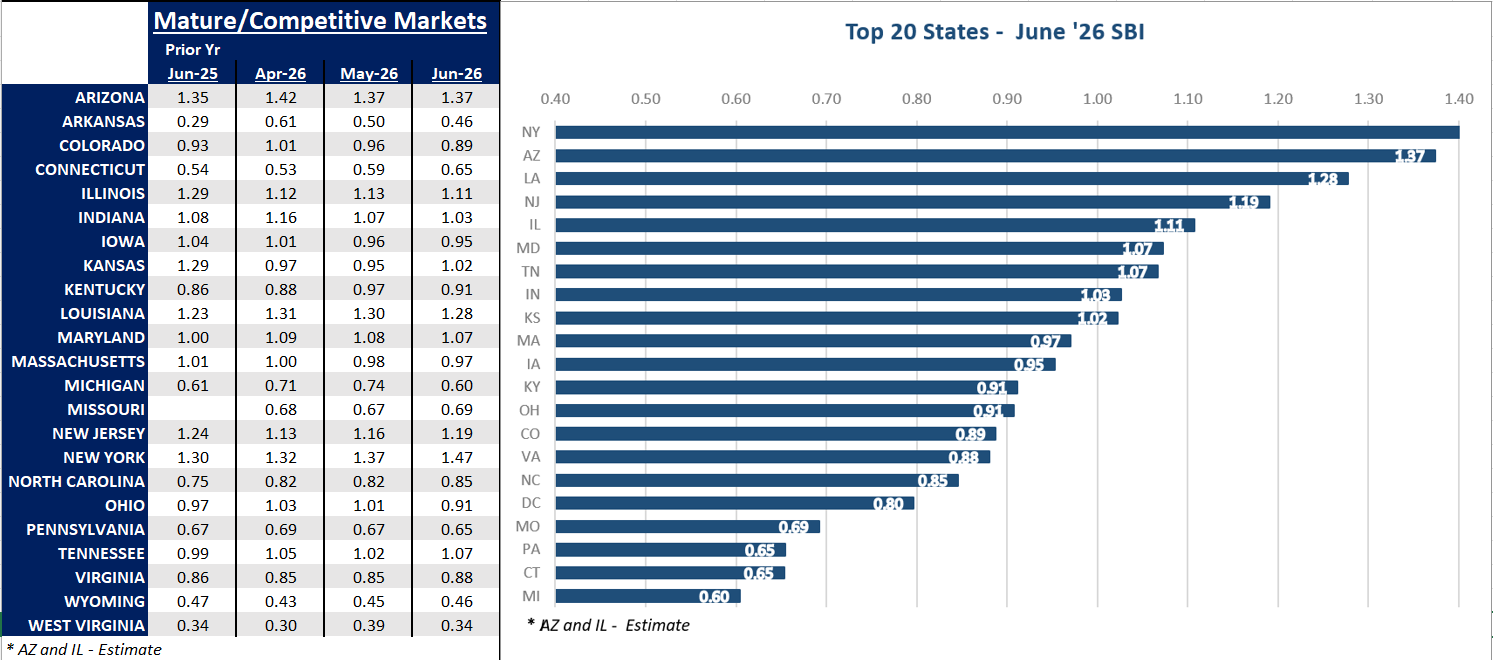
*State reported numbers as of August 11, 2026
As the nation continues debating the role of prediction markets, it is important to remember why sports betting was legalized in the first place. The broad public policy argument was “bringing sports wagering into a regulated framework would provide consumer protections, improve oversight, protect market integrity, and create a recurring source of tax revenue for states.”
A sportsbook losing customers to another operator is a business challenge, but it does not necessarily create a public policy concern. A sportsbook losing customers to a competitor with more favorable tax treatment, and an uncertain regulatory regime, should be a concern for everyone. When examining this evolving sports betting dynamic, the important truth to remember is, once revenue becomes part of recurring state budgets, it becomes part of future financial planning.
Tax Treatment Matters
This creates an important question as the market matures: if sports betting tax revenue stops growing, or begins declining, does it continue delivering the public benefit that helped justify legalization?
A sports betting tax stream that remains unchanged year after year is effectively declining in value. A state collecting $500 million annually today may view that as a significant success, but if that same state collects $500 million five years from now, inflation has reduced the purchasing power of those dollars while government obligations continue increasing.
The issue is not that sports betting revenue disappears. The issue is the growth policymakers anticipated when legalization was approved may not occur. That challenge becomes even more significant if consumer demand migrates toward products that generate less tax revenue for the jurisdictions that authorized sports betting.
Opportunities and Challenges
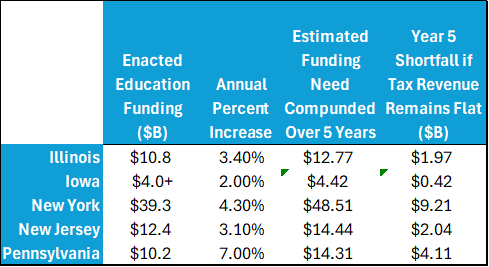
A quick thumbnail calculation reveals the following example regarding the education related tax revenue needs of several prominent sports betting states and the impact of stagnant overall tax revenues:
*State reported numbers as of August 11, 2026
New York, with a 50% GGR tax, provides the most extreme scenario of both the opportunity created by sports betting taxation, and the fiscal challenge of a maturing market. The state's mobile sports betting program has generated more than $4.5 billion in total tax revenue since launch, with the majority supporting education. Those results exceeded many early projections and demonstrated the significant public revenue potential of regulated sports wagering.
Illinois highlights another challenge facing policymakers. As sports betting has matured, the state has increased the tax burden applied to operators. When a new economic sector generates significant revenue, legislators naturally seek to maximize the public benefit.
However, tax increases cannot replace market growth indefinitely. If taxable activity stops expanding, increasing the percentage collected from that activity eventually reaches a point of diminishing returns.
Competition Is Not the Issue, Tax Neutrality Is
The alcoholic beverage industry provides a useful comparison. Over the past several decades, consumer preferences have shifted significantly. Traditional beer brands have lost market share to craft breweries, hard seltzers created an entirely new category, ready-to-drink cocktails expanded consumer choices, and spirits gained share against other beverage segments. Many existing operators have endured market share shifts.
Yet government tax revenue has generally remained intact because competing products operate under comparable regulatory and tax frameworks. Consumer choices impact which company benefits, but the underlying activity remains subject to alcohol licensing, excise taxes, and other regulatory requirements.
Competition changes winners and losers. It does not necessarily change government revenue. The challenge arises when similar consumer activity moves into products operating under a substantially different tax structure.
Why Prediction Markets Matter to States
The question is not whether emerging products such as prediction markets should exist. That involves broader questions for another day. The fiscal question is narrower: If consumers use alternative products for sports betting interests, do those activities contribute to the public revenue framework that helped justify legalization?
For sportsbooks, competition can mean losing revenues. For states, it likely means losing future tax revenues expected to fund public priorities. That is why comparable tax treatment matters more to governments than to individual operators.
Sports betting legalization has created a legal marketplace where none (outside Nevada) previously existed. The next challenge is ensuring the public revenue model supporting legalization remains sustainable. When economically similar activities operate under materially different tax structures, the issue becomes larger than industry competition. For states, the issue is whether the broader sports-related wagering economy continues generating the public revenues that legalization promised.
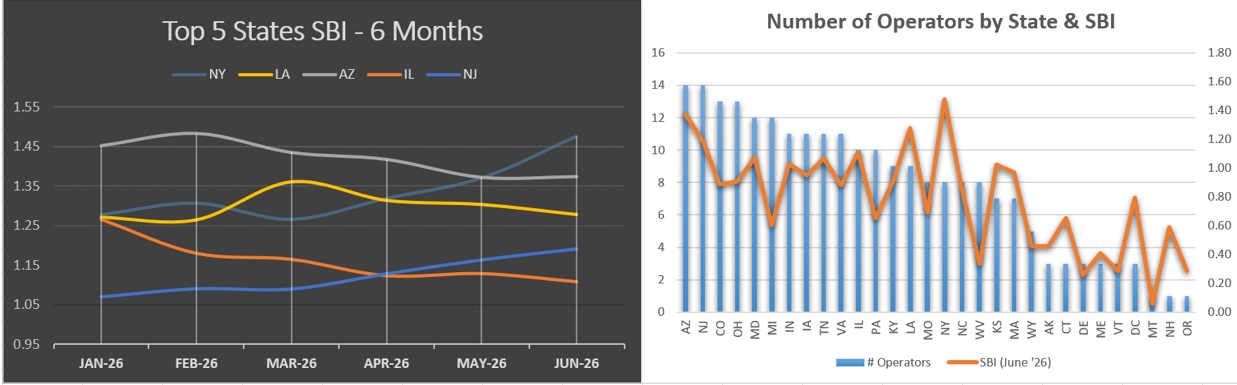
*State reported numbers as of August 11, 2026
Published: 08/24/2026
Readers should not act upon information presented without individual professional consultation.
Any federal tax advice contained in this communication (including any attachments): (i) is intended for your use only; (ii) is based on the accuracy and completeness of the facts you have provided us; and (iii) may not be relied upon to avoid penalties.